Most of what is written about Indaba in English is wrong. Not maliciously — usually it is wrong because Indaba resists translation, because the concept does not match neatly onto Western categories, because the writers are working with a sentence-long summary instead of a tradition. "If You Want to Go Far, Go Together" — A Reading? This essay is one attempt at a more careful answer.
What Indaba Actually Means
Translators usually settle on something like: Indaba is a Zulu and Xhosa word for a council meeting — historically of elders, today of any group that needs to make a decision worth keeping. The form has been borrowed by international climate negotiators, corporate boards, and community organisations because of one quality: it produces decisions that hold. It does this by refusing the Western meeting model — the loudest voice, the rushed vote, the unread minutes — in favour of structured listening, ritualised speech, and visible consensus. It is a defensible translation. But translation is the surface. Indaba carries underneath it a set of assumptions — about what a person is, what owes what to whom, and what success even means — that the English sentence cannot deliver.
When elders speak, children grow.Zulu
The Question This Post Is About
The most-quoted African proverb, read closely through Indaba. The question is worth taking seriously, because Indaba is one of those concepts that loses its shape when handled carelessly — and recovers it as soon as the reader is willing to slow down and listen.
Consider one of the central sayings in the tradition behind Indaba: "If you want to know the end, listen to the beginning." — translated above. It is the kind of saying that English readers tend to admire and then forget. The Zulu / Xhosa reading is more demanding. No decision of consequence is made in a meeting under one hour, and no one speaks twice before everyone has spoken once. The proverb is not decorative. It is instructional. It has been carried for generations because it solves a problem that does not stop being a problem — a problem the modern reader still meets, every week, dressed in newer clothes.
A Second Angle
Read alongside it: "The wise listen before they speak; fools speak before they listen." The two sayings are not redundant. They sit at different angles to the same idea. In Zulu / Xhosa oral tradition this is a common pattern: a concept like Indaba is not given a single canonical definition but a family of proverbs, each holding part of the meaning. You learn the concept by living with the family of sayings — not by mastering one of them.
Where the Concept Resists
Indaba is sometimes presented as the answer to the diseases of Western individualism. It is not, exactly. It is a different answer to a different question. Pretending it is a drop-in replacement for the modern self-help bookshelf does Indaba a disservice — and the reader, too. The work of taking it seriously is harder than that.
What to Do With This
There is no certificate at the end of Indaba. There is only the slow accumulation of choices made differently — meetings shaped differently, relationships tended differently, decisions weighed differently. The reward is not visible. The cost is real. Over time the difference becomes a kind of life.
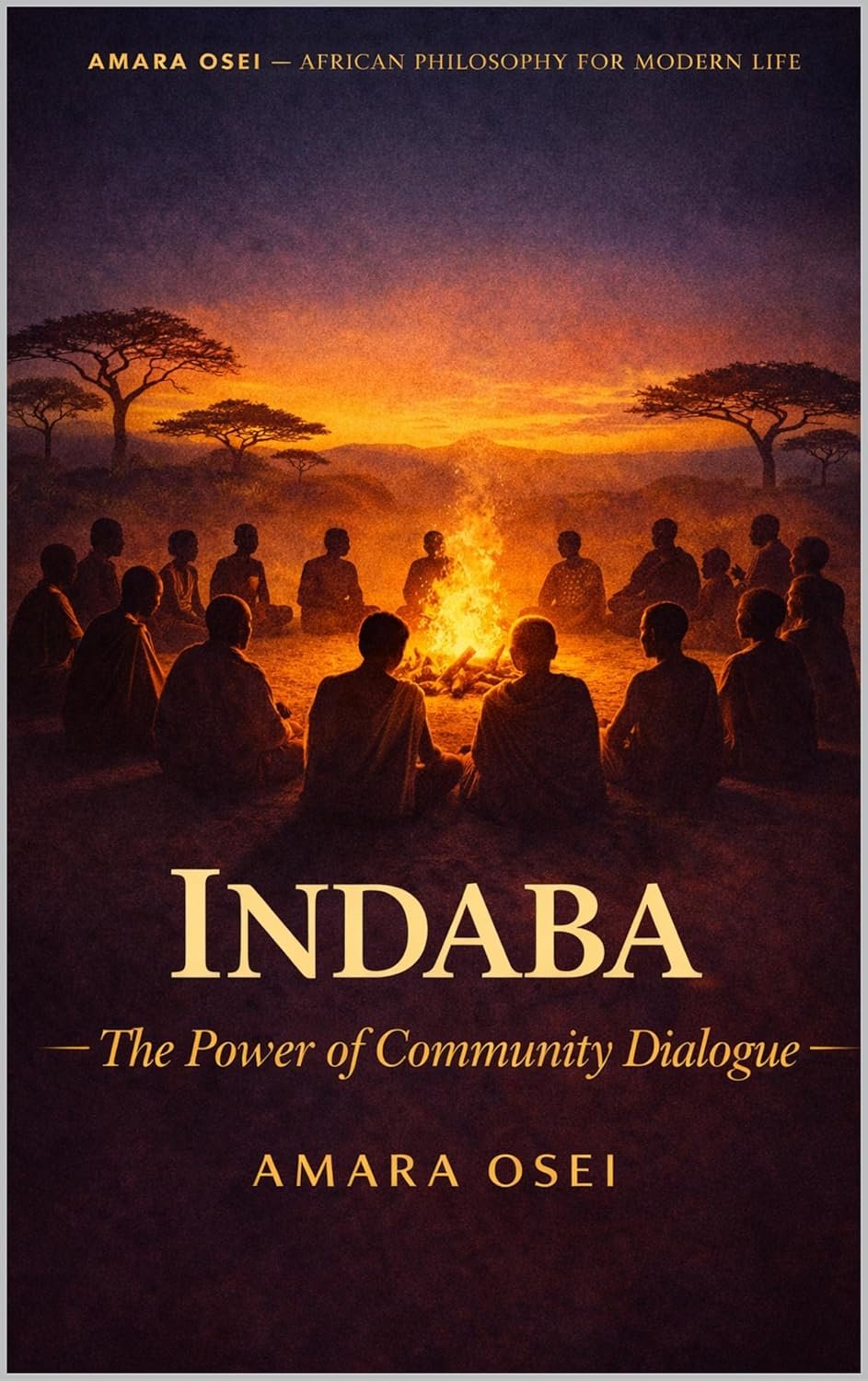
The full philosophy, as a book
How to run meetings where everyone is heard — and the decisions you make actually stick.
Read on Amazon