Begin with the word itself. Indaba, in Zulu / Xhosa / Nguni, sits in a different grammatical and emotional register than its closest English equivalents. Indaba and Loneliness? You cannot answer that question without first sitting with the word — and noticing what English doesn't quite have a slot for.
What Indaba Actually Means
Translators usually settle on something like: Indaba is a Zulu and Xhosa word for a council meeting — historically of elders, today of any group that needs to make a decision worth keeping. The form has been borrowed by international climate negotiators, corporate boards, and community organisations because of one quality: it produces decisions that hold. It does this by refusing the Western meeting model — the loudest voice, the rushed vote, the unread minutes — in favour of structured listening, ritualised speech, and visible consensus. It is a defensible translation. But translation is the surface. Indaba carries underneath it a set of assumptions — about what a person is, what owes what to whom, and what success even means — that the English sentence cannot deliver.
The wise listen before they speak; fools speak before they listen.Akan
The Question This Post Is About
The lonely person and the philosophy that says you don't have to be. The question is worth taking seriously, because Indaba is one of those concepts that loses its shape when handled carelessly — and recovers it as soon as the reader is willing to slow down and listen.
For the person living far from Southern Africa — in a city of strangers, in a flat of one, in a job that has nothing to do with the village they came from — Indaba can feel like it belongs to someone else's life. It does not. The diasporic reading of Indaba is not a watered-down version. It is a different test of the same idea. Disagreement is recorded in the minutes, not absorbed by majority rule.
A Second Angle
The most concrete way Indaba shows up in working life is in how a manager handles failure. The Western reflex is to find the responsible individual, document the failure, and move on. Indaba insists on a slower, harder question first: what did the team make possible, and what did it fail to prevent? The shift sounds soft. It is not. Disagreement is recorded in the minutes, not absorbed by majority rule.
Where the Concept Resists
Indaba is sometimes presented as the answer to the diseases of Western individualism. It is not, exactly. It is a different answer to a different question. Pretending it is a drop-in replacement for the modern self-help bookshelf does Indaba a disservice — and the reader, too. The work of taking it seriously is harder than that.
What to Do With This
What can you do with this? Begin small. Choose one place — one meeting, one relationship, one daily ritual — and run it through Indaba for a month. Not as a project. As a quiet experiment. Notice what changes. Indaba is not learned by reading; it is learned by repetition.
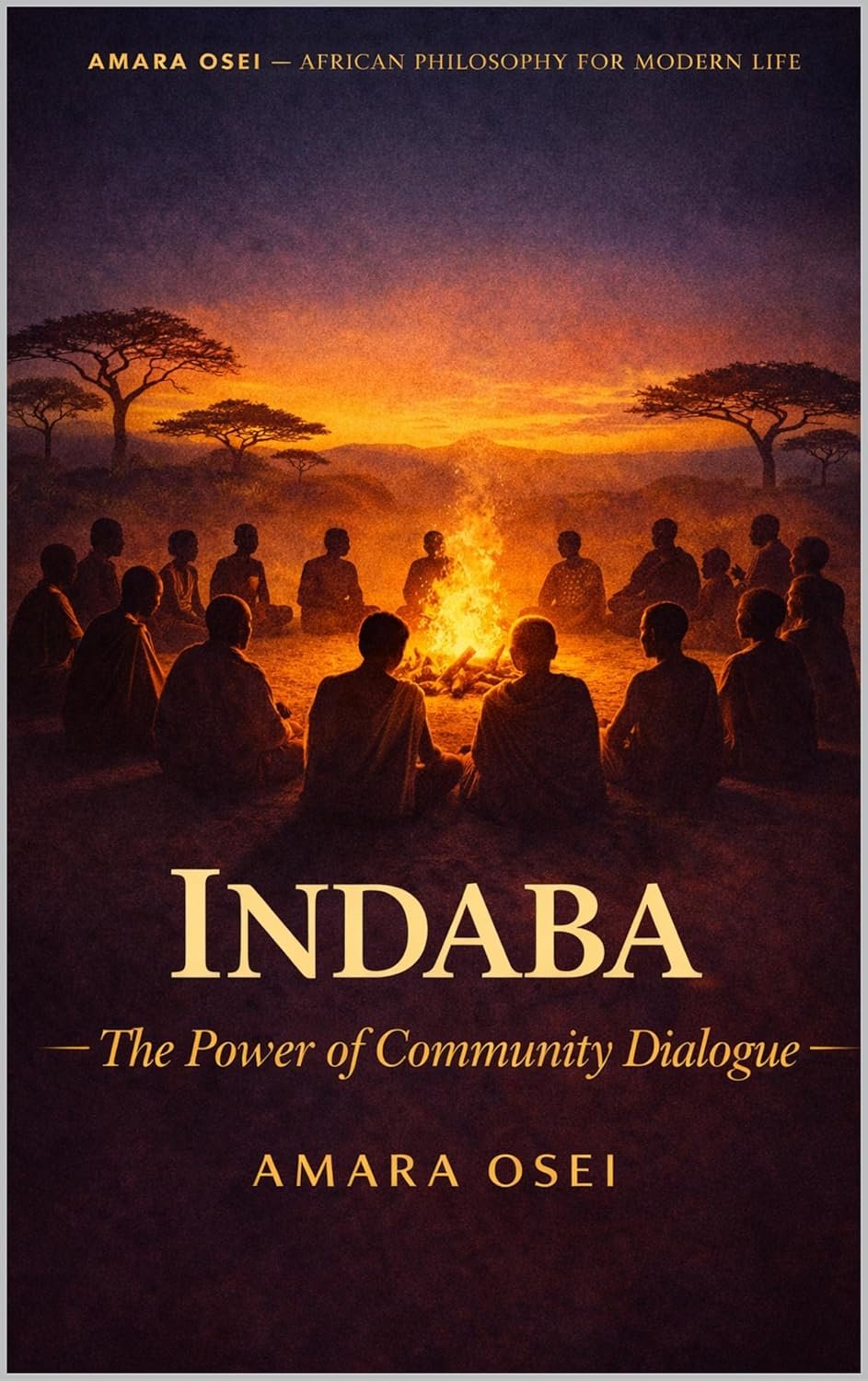
The full philosophy, as a book
How to run meetings where everyone is heard — and the decisions you make actually stick.
Read on Amazon