Most of what is written about Indaba in English is wrong. Not maliciously — usually it is wrong because Indaba resists translation, because the concept does not match neatly onto Western categories, because the writers are working with a sentence-long summary instead of a tradition. Indaba and the Long Marriage? This essay is one attempt at a more careful answer.
What Indaba Actually Means
Indaba is a Zulu and Xhosa word for a council meeting — historically of elders, today of any group that needs to make a decision worth keeping. The form has been borrowed by international climate negotiators, corporate boards, and community organisations because of one quality: it produces decisions that hold. It does this by refusing the Western meeting model — the loudest voice, the rushed vote, the unread minutes — in favour of structured listening, ritualised speech, and visible consensus. This much is on Wikipedia and in introductory leadership books. What is harder to find — and harder to translate — is the texture of the concept: the way Indaba shapes a thousand small daily choices in a Zulu / Southern African household, and how those choices accumulate into a different shape of life.
Indaba ibanjwa ngabaningi.Zulu — A matter is held by the many.
The Question This Post Is About
What Indaba contributes to a marriage that has lasted decades. The question is worth taking seriously, because Indaba is one of those concepts that loses its shape when handled carelessly — and recovers it as soon as the reader is willing to slow down and listen.
In a long marriage, Indaba is the antidote to the modern romantic fantasy that each partner is supposed to be the other's everything. The Zulu / Southern African version is gentler: you are part of a wider weave, and so is your marriage, and the marriage is held in part by the people around it. The most senior person speaks last, not first.
A Second Angle
If you take Indaba seriously at work, the first thing that has to change is the meeting. Not its agenda — its shape. Western meetings are optimised for speed and for the loudest contributor. Indaba is optimised for something else: for the quality of decisions that hold. The most senior person speaks last, not first. The trade-off is real. Meetings under Indaba take longer. The decisions also unstick less often.
Where the Concept Resists
Indaba is sometimes presented as the answer to the diseases of Western individualism. It is not, exactly. It is a different answer to a different question. Pretending it is a drop-in replacement for the modern self-help bookshelf does Indaba a disservice — and the reader, too. The work of taking it seriously is harder than that.
What to Do With This
If you are new to Indaba, the most useful place to start is not with a study or a course but with a question, asked of yourself, at the end of an ordinary day: who held me up today, and whom did I hold? Sit with the answer. Do not improve it yet. The concept will deepen on its own, repeated, over weeks. This is how Indaba actually enters a life.
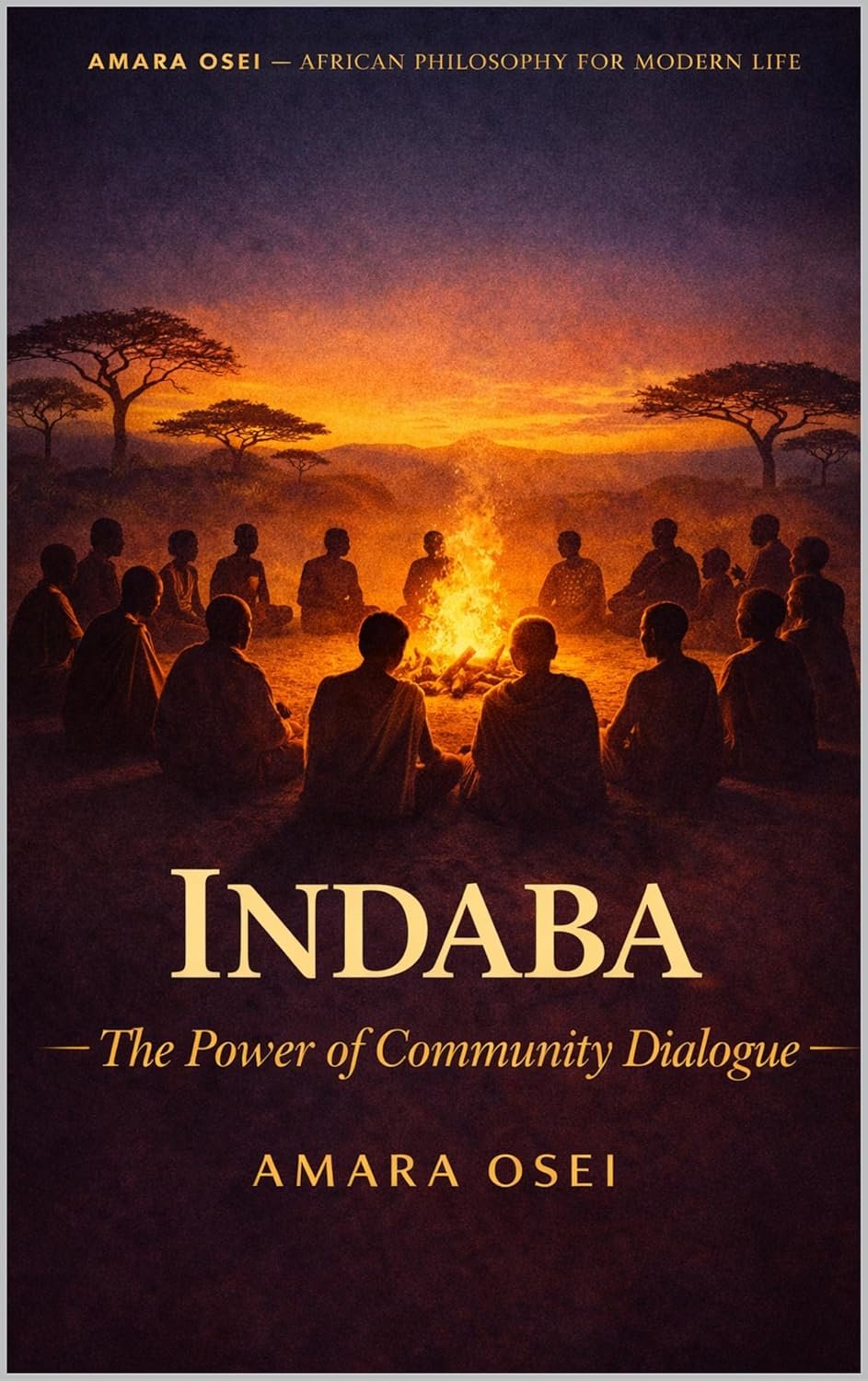
The full philosophy, as a book
How to run meetings where everyone is heard — and the decisions you make actually stick.
Read on Amazon