Indaba in the Twenty-First Century? It is the kind of question that admits of two answers — a quick one and a true one. The quick answer is that Indaba means the community council. a method of inclusive decision-making where every voice shapes the outcome and the decision actually sticks. The true answer takes longer, because Indaba is not really a concept; it is a way of seeing.
What Indaba Actually Means
Translators usually settle on something like: Indaba is a Zulu and Xhosa word for a council meeting — historically of elders, today of any group that needs to make a decision worth keeping. The form has been borrowed by international climate negotiators, corporate boards, and community organisations because of one quality: it produces decisions that hold. It does this by refusing the Western meeting model — the loudest voice, the rushed vote, the unread minutes — in favour of structured listening, ritualised speech, and visible consensus. It is a defensible translation. But translation is the surface. Indaba carries underneath it a set of assumptions — about what a person is, what owes what to whom, and what success even means — that the English sentence cannot deliver.
Two heads are better than one.African proverb
The Question This Post Is About
What Indaba looks like now — in cities, online, and in workplaces far from Southern Africa. The question is worth taking seriously, because Indaba is one of those concepts that loses its shape when handled carelessly — and recovers it as soon as the reader is willing to slow down and listen.
Take the modern workplace as a test case. The dominant Western model treats the team as a coalition of individual contributors who happen to share a Slack channel — each evaluated alone, promoted alone, and let go alone. Indaba starts somewhere different. It assumes that the unit of analysis is the team, that performance is co-produced, that to praise a single person without naming the people around them is a kind of category error. The implications are uncomfortable for managers trained in the Western model. Meetings end with the convener summarising what was decided and asking each person whether they recognise the summary.
A Second Angle
The most concrete way Indaba shows up in working life is in how a manager handles failure. The Western reflex is to find the responsible individual, document the failure, and move on. Indaba insists on a slower, harder question first: what did the team make possible, and what did it fail to prevent? The shift sounds soft. It is not. Meetings end with the convener summarising what was decided and asking each person whether they recognise the summary.
Where the Concept Resists
There is also the question of authority. Who gets to speak for Indaba? The traditions in which it lives are old, plural, sometimes in disagreement with each other. Anyone — including the writer of this essay — who claims a definitive reading is overreaching. The careful reader treats every restatement of Indaba, including this one, as one voice among many.
What to Do With This
There is no certificate at the end of Indaba. There is only the slow accumulation of choices made differently — meetings shaped differently, relationships tended differently, decisions weighed differently. The reward is not visible. The cost is real. Over time the difference becomes a kind of life.
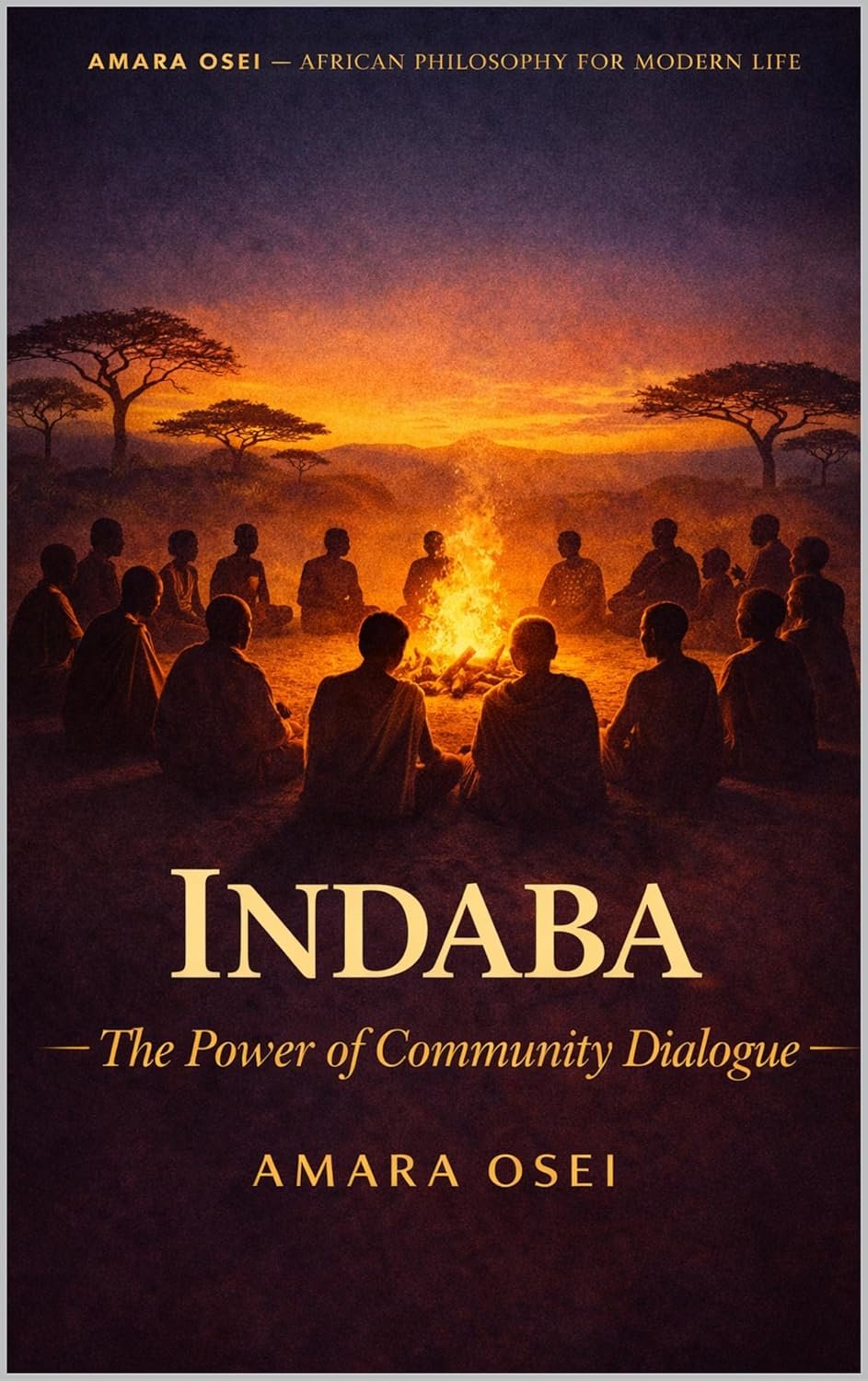
The full philosophy, as a book
How to run meetings where everyone is heard — and the decisions you make actually stick.
Read on Amazon