There is a particular way the word Sankofa arrives in modern conversations. It is invoked, often, as a slogan — pinned to a wall in a corporate office, dropped into a leadership keynote, printed on a tote bag. Sankofa and the Question of Translation? The slogan version of Sankofa is easy to admire and easy to ignore. The actual concept, the one that has shaped Akan / Ghanaian life for generations, is harder. It demands more. And it is, I think, more useful.
What Sankofa Actually Means
Sankofa is an Akan word and a symbol — most often a bird with its head turned backward, holding an egg in its beak. The egg is the future; the head turned backward is the past. Together they teach a simple, demanding idea: it is not wrong, nor shameful, to go back and fetch what you forgot. The future cannot be built on amnesia. This much is on Wikipedia and in introductory leadership books. What is harder to find — and harder to translate — is the texture of the concept: the way Sankofa shapes a thousand small daily choices in a Akan / Ghanaian household, and how those choices accumulate into a different shape of life.
If you don't know where you're going, return to where you came from.Akan
The Question This Post Is About
Why every translator of Sankofa eventually gives up and uses the original. The question is worth taking seriously, because Sankofa is one of those concepts that loses its shape when handled carelessly — and recovers it as soon as the reader is willing to slow down and listen.
Take the modern workplace as a test case. The dominant Western model treats the team as a coalition of individual contributors who happen to share a Slack channel — each evaluated alone, promoted alone, and let go alone. Sankofa starts somewhere different. It assumes that the unit of analysis is the team, that performance is co-produced, that to praise a single person without naming the people around them is a kind of category error. The implications are uncomfortable for managers trained in the Western model. The first hire of any new venture is someone older who has done it before.
A Second Angle
The most concrete way Sankofa shows up in working life is in how a manager handles failure. The Western reflex is to find the responsible individual, document the failure, and move on. Sankofa insists on a slower, harder question first: what did the team make possible, and what did it fail to prevent? The shift sounds soft. It is not. The first hire of any new venture is someone older who has done it before.
Where the Concept Resists
It would be dishonest to pretend Sankofa is uncomplicated. The concept can be — and has been — used to suppress dissent in the name of harmony, to extract unpaid labour from women in the name of community, and to soften criticism that should have been sharper. Any serious reading of Sankofa has to hold these uses in view. The concept survives the criticism. But it is not innocent.
What to Do With This
If you are new to Sankofa, the most useful place to start is not with a study or a course but with a question, asked of yourself, at the end of an ordinary day: who held me up today, and whom did I hold? Sit with the answer. Do not improve it yet. The concept will deepen on its own, repeated, over weeks. This is how Sankofa actually enters a life.
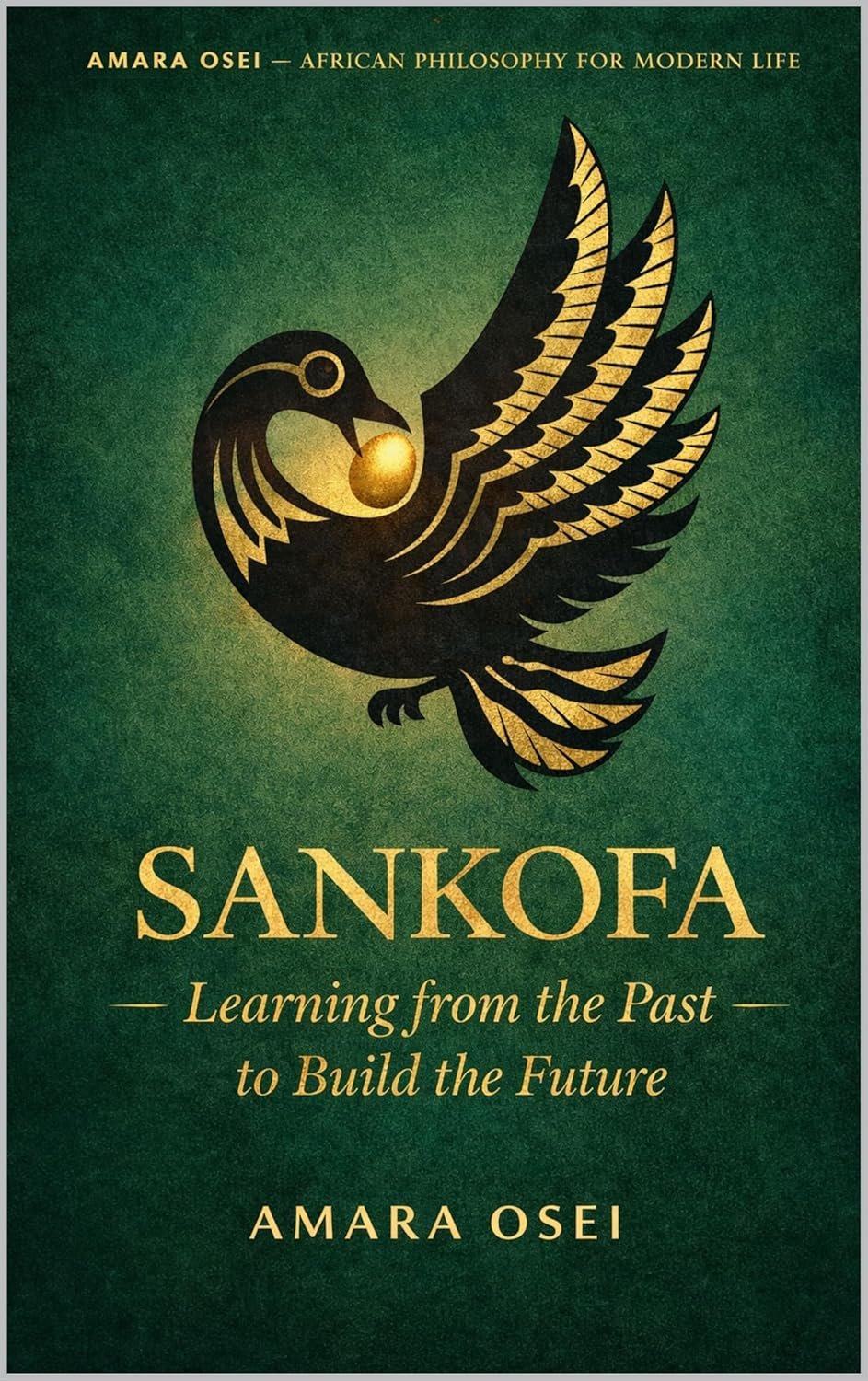
The full philosophy, as a book
How to use your history, your failures, and your traditions as fuel rather than baggage.
Read on Amazon