Sankofa in the Diaspora? It is the kind of question that admits of two answers — a quick one and a true one. The quick answer is that Sankofa means go back and fetch it. the akan wisdom that you cannot move forward well without recovering what was left behind. The true answer takes longer, because Sankofa is not really a concept; it is a way of seeing.
What Sankofa Actually Means
The most commonly cited definition: Sankofa is an Akan word and a symbol — most often a bird with its head turned backward, holding an egg in its beak. The egg is the future; the head turned backward is the past. Together they teach a simple, demanding idea: it is not wrong, nor shameful, to go back and fetch what you forgot. The future cannot be built on amnesia. That sentence is true, as far as it goes. It is also incomplete. Sankofa is held inside a wider Akan grammar — a set of related concepts, social practices, and proverbs — that the standalone definition cannot carry.
The past is not behind us — it is beneath us.Akan saying
The Question This Post Is About
Living Sankofa when you are far from Ghana, West Africa — and far from anyone who knows the word. The question is worth taking seriously, because Sankofa is one of those concepts that loses its shape when handled carelessly — and recovers it as soon as the reader is willing to slow down and listen.
In a long marriage, Sankofa is the antidote to the modern romantic fantasy that each partner is supposed to be the other's everything. The Akan / Ghanaian version is gentler: you are part of a wider weave, and so is your marriage, and the marriage is held in part by the people around it. Every project begins by reading the postmortems of the previous three.
A Second Angle
If you take Sankofa seriously at work, the first thing that has to change is the meeting. Not its agenda — its shape. Western meetings are optimised for speed and for the loudest contributor. Sankofa is optimised for something else: for the quality of decisions that hold. Every project begins by reading the postmortems of the previous three. The trade-off is real. Meetings under Sankofa take longer. The decisions also unstick less often.
Where the Concept Resists
There is also the question of authority. Who gets to speak for Sankofa? The traditions in which it lives are old, plural, sometimes in disagreement with each other. Anyone — including the writer of this essay — who claims a definitive reading is overreaching. The careful reader treats every restatement of Sankofa, including this one, as one voice among many.
What to Do With This
There is no certificate at the end of Sankofa. There is only the slow accumulation of choices made differently — meetings shaped differently, relationships tended differently, decisions weighed differently. The reward is not visible. The cost is real. Over time the difference becomes a kind of life.
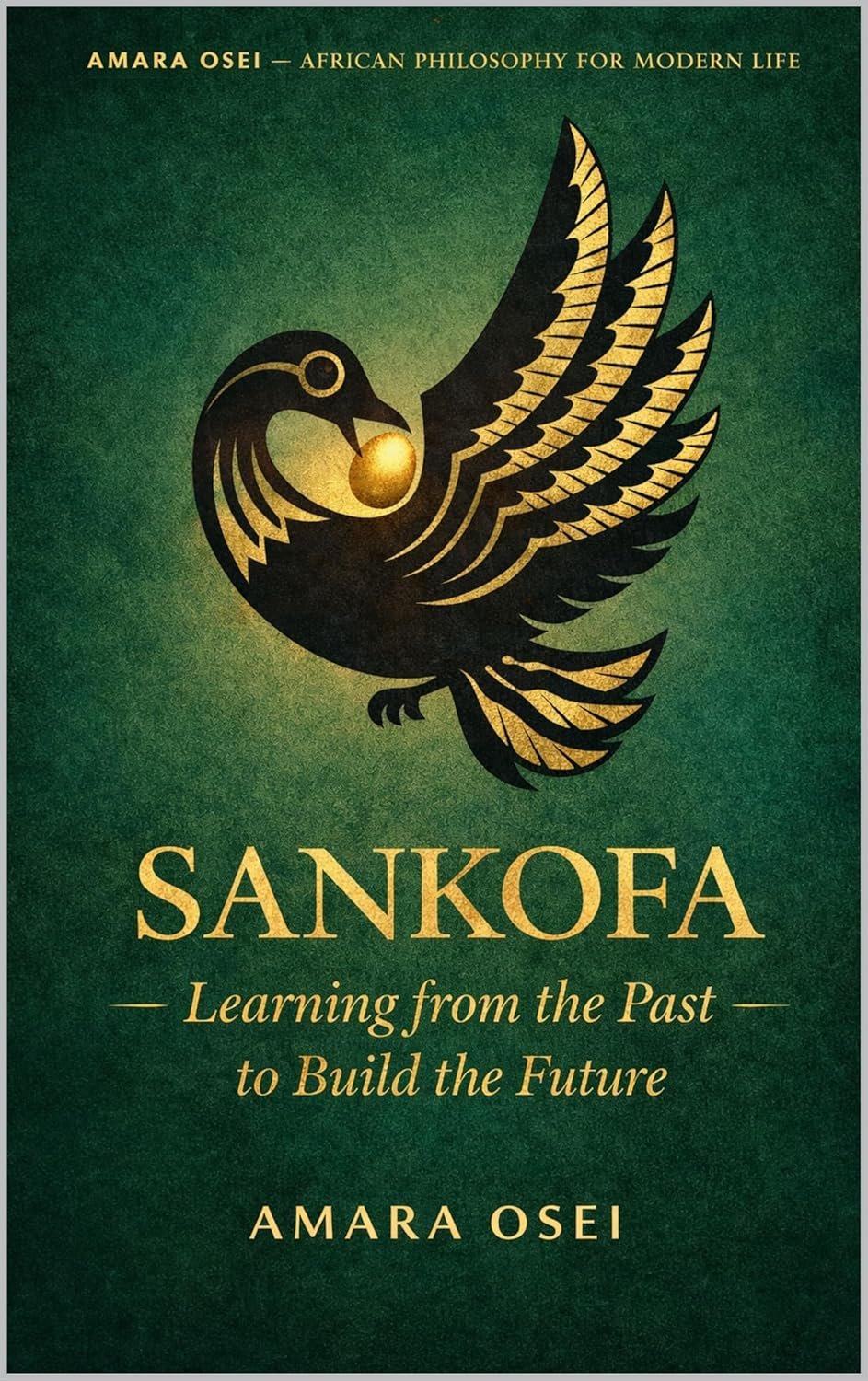
The full philosophy, as a book
How to use your history, your failures, and your traditions as fuel rather than baggage.
Read on Amazon