I want to begin with a memory that is not mine but has been told to me many times. An old man, dying, calls his children to his bedside. He does not give them money. He gives each of them a single stick, and asks them to break it. They break the sticks easily. Then he hands them a bundle of sticks tied together, and asks them to break the bundle. They cannot. Whether or not it ever happened, the memory teaches what Ubuntu is — better than any definition does. Ubuntu and the Stoic Tradition? The story is the answer.
What Ubuntu Actually Means
The most commonly cited definition: Ubuntu, in its most cited form, is captured in the Nguni phrase 'umuntu ngumuntu ngabantu' — a person is a person through other people. It names a worldview in which the self is not a fortress but a node in a network, and in which dignity, identity, and success are inherited from and accountable to community. It has shaped post-apartheid South Africa, modern leadership theory, and increasingly the way thoughtful organisations think about teams. That sentence is true, as far as it goes. It is also incomplete. Ubuntu is held inside a wider Bantu grammar — a set of related concepts, social practices, and proverbs — that the standalone definition cannot carry.
One finger cannot lift a stone.Hausa
The Question This Post Is About
What Bantu thought and Stoicism agree on, and where they part company. The question is worth taking seriously, because Ubuntu is one of those concepts that loses its shape when handled carelessly — and recovers it as soon as the reader is willing to slow down and listen.
If you take Ubuntu seriously at work, the first thing that has to change is the meeting. Not its agenda — its shape. Western meetings are optimised for speed and for the loudest contributor. Ubuntu is optimised for something else: for the quality of decisions that hold. Hiring decisions are made by the team the new person will work in, not the manager alone. The trade-off is real. Meetings under Ubuntu take longer. The decisions also unstick less often.
A Second Angle
The comparison is not symmetric. Ubuntu did not develop in dialogue with the Western frameworks it now sits beside on a bookshelf. It developed inside Bantu life, answering questions that Bantu life kept posing. To ask whether Ubuntu is "better than" individualism, or stoicism, or productivity culture, is to ask the wrong question. The right question is narrower and more useful: what does Ubuntu see clearly that the framework I currently use does not? Hiring decisions are made by the team the new person will work in, not the manager alone.
Where the Concept Resists
It would be dishonest to pretend Ubuntu is uncomplicated. The concept can be — and has been — used to suppress dissent in the name of harmony, to extract unpaid labour from women in the name of community, and to soften criticism that should have been sharper. Any serious reading of Ubuntu has to hold these uses in view. The concept survives the criticism. But it is not innocent.
What to Do With This
There is no certificate at the end of Ubuntu. There is only the slow accumulation of choices made differently — meetings shaped differently, relationships tended differently, decisions weighed differently. The reward is not visible. The cost is real. Over time the difference becomes a kind of life.
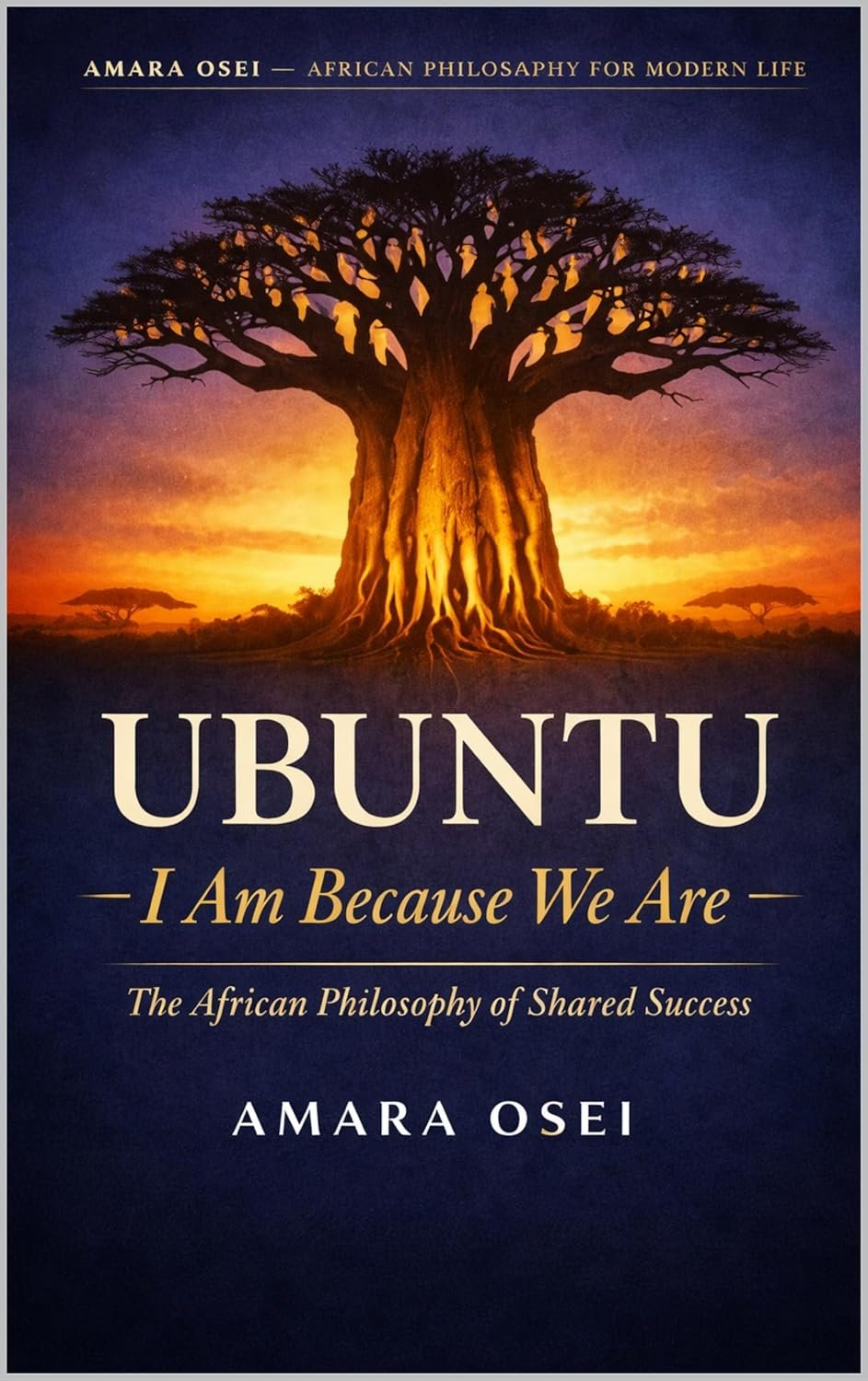
The full philosophy, as a book
The full philosophy of shared success — across leadership, conflict, accountability, and the digital age.
Read on Amazon