Begin with the word itself. Sankofa, in Akan / Twi, sits in a different grammatical and emotional register than its closest English equivalents. Sankofa for Founders? You cannot answer that question without first sitting with the word — and noticing what English doesn't quite have a slot for.
What Sankofa Actually Means
Let me give the canonical definition first, then try to do a little better. Sankofa is an Akan word and a symbol — most often a bird with its head turned backward, holding an egg in its beak. The egg is the future; the head turned backward is the past. Together they teach a simple, demanding idea: it is not wrong, nor shameful, to go back and fetch what you forgot. The future cannot be built on amnesia. The canonical version is correct but tame. The full version of Sankofa is less polite, more demanding, and more interesting. It does not flatter the reader who has just discovered it.
If you don't know where you're going, return to where you came from.Akan
The Question This Post Is About
What Sankofa offers founders building organisations from scratch. The question is worth taking seriously, because Sankofa is one of those concepts that loses its shape when handled carelessly — and recovers it as soon as the reader is willing to slow down and listen.
The most concrete way Sankofa shows up in working life is in how a manager handles failure. The Western reflex is to find the responsible individual, document the failure, and move on. Sankofa insists on a slower, harder question first: what did the team make possible, and what did it fail to prevent? The shift sounds soft. It is not. The first hire of any new venture is someone older who has done it before.
A Second Angle
Outside the workplace, Sankofa reads differently — and harder. In a household, it is not a leadership philosophy; it is a daily, sometimes irritating, set of obligations. The phone call you owe. The message you have not answered. The relative whose problem is now your problem because no one else is closer. The first hire of any new venture is someone older who has done it before. Sankofa does not let you opt out of these.
Where the Concept Resists
There is a real risk in romanticising Sankofa. The Akan / Ghanaian traditions that produced it have always also produced internal critics — voices warning against the misuse of communal philosophy to demand conformity, to silence the young, to protect bad behaviour by elders. The honest defender of Sankofa keeps those critics at the table.
What to Do With This
If you are new to Sankofa, the most useful place to start is not with a study or a course but with a question, asked of yourself, at the end of an ordinary day: who held me up today, and whom did I hold? Sit with the answer. Do not improve it yet. The concept will deepen on its own, repeated, over weeks. This is how Sankofa actually enters a life.
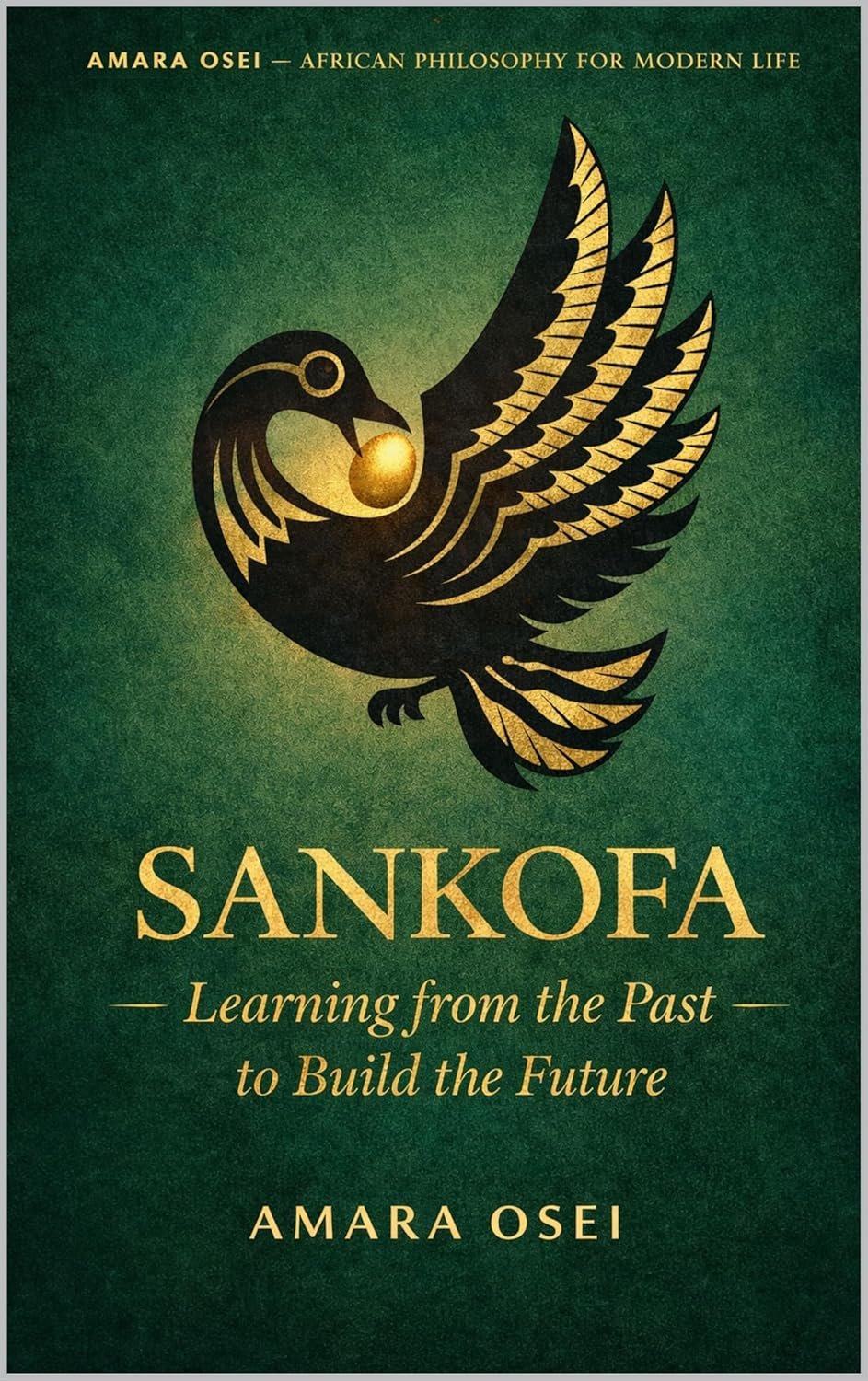
The full philosophy, as a book
How to use your history, your failures, and your traditions as fuel rather than baggage.
Read on Amazon