If you have heard Sankofa only in the context of corporate diversity training or a viral leadership quote, you have not really heard Sankofa. Sankofa in Sales? The version of the word that survives in Ghana, West Africa is older, stranger, and more demanding than the version that travels.
What Sankofa Actually Means
Let me give the canonical definition first, then try to do a little better. Sankofa is an Akan word and a symbol — most often a bird with its head turned backward, holding an egg in its beak. The egg is the future; the head turned backward is the past. Together they teach a simple, demanding idea: it is not wrong, nor shameful, to go back and fetch what you forgot. The future cannot be built on amnesia. The canonical version is correct but tame. The full version of Sankofa is less polite, more demanding, and more interesting. It does not flatter the reader who has just discovered it.
Wisdom is like a baobab tree; no one individual can embrace it.Akan
The Question This Post Is About
Selling through the lens of Sankofa — and why it produces durable customers, not just deals. The question is worth taking seriously, because Sankofa is one of those concepts that loses its shape when handled carelessly — and recovers it as soon as the reader is willing to slow down and listen.
There is a specific application of Sankofa that managers rediscover every few years and act surprised to find: the practice of asking, before any consequential decision, who has not yet been heard from. The question seems procedural. It is not. It is a small Sankofa act, repeated, that changes the temperature of an organisation over years. Every project begins by reading the postmortems of the previous three.
A Second Angle
Outside the workplace, Sankofa reads differently — and harder. In a household, it is not a leadership philosophy; it is a daily, sometimes irritating, set of obligations. The phone call you owe. The message you have not answered. The relative whose problem is now your problem because no one else is closer. Every project begins by reading the postmortems of the previous three. Sankofa does not let you opt out of these.
Where the Concept Resists
Sankofa is sometimes presented as the answer to the diseases of Western individualism. It is not, exactly. It is a different answer to a different question. Pretending it is a drop-in replacement for the modern self-help bookshelf does Sankofa a disservice — and the reader, too. The work of taking it seriously is harder than that.
What to Do With This
There is no certificate at the end of Sankofa. There is only the slow accumulation of choices made differently — meetings shaped differently, relationships tended differently, decisions weighed differently. The reward is not visible. The cost is real. Over time the difference becomes a kind of life.
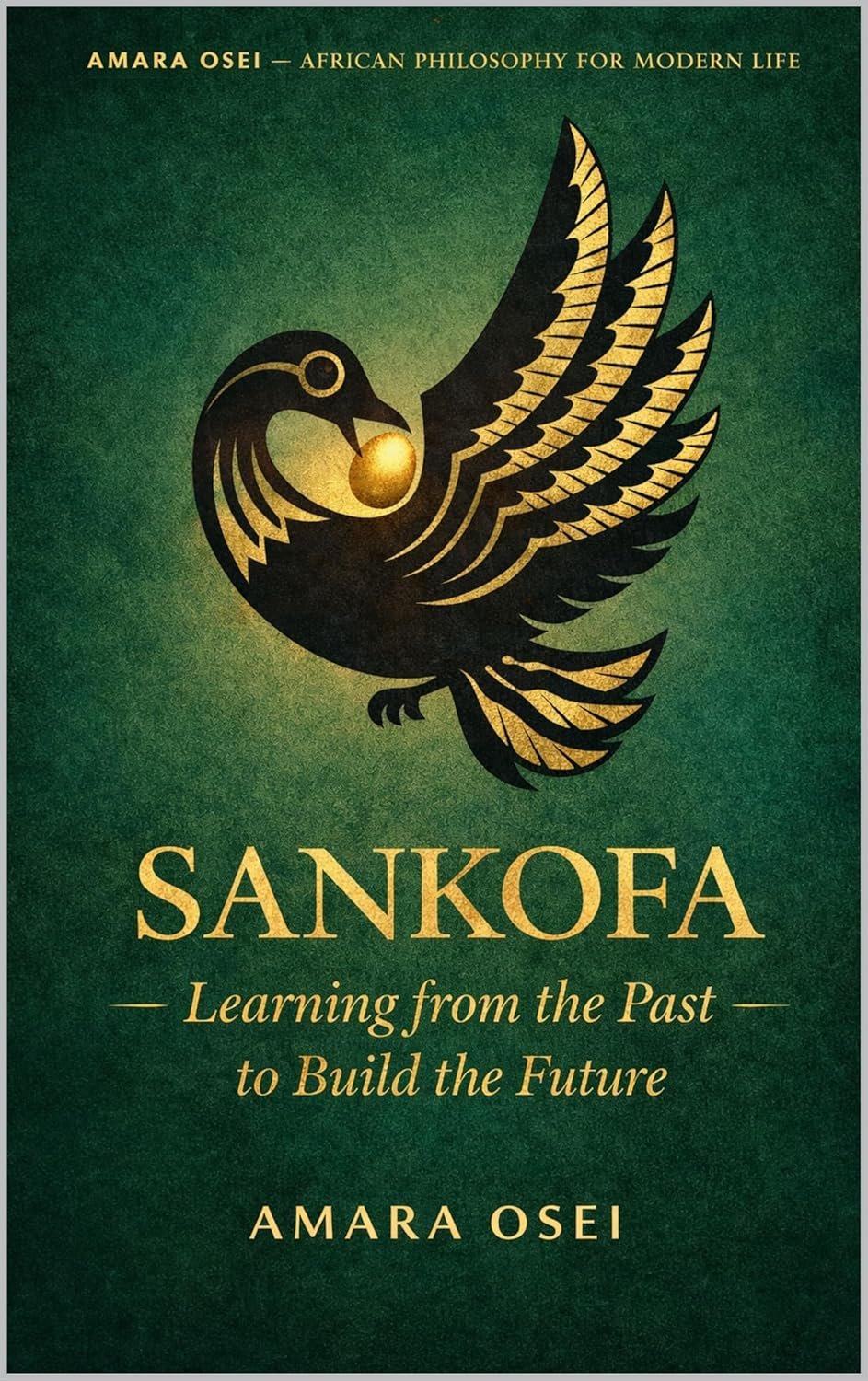
The full philosophy, as a book
How to use your history, your failures, and your traditions as fuel rather than baggage.
Read on Amazon